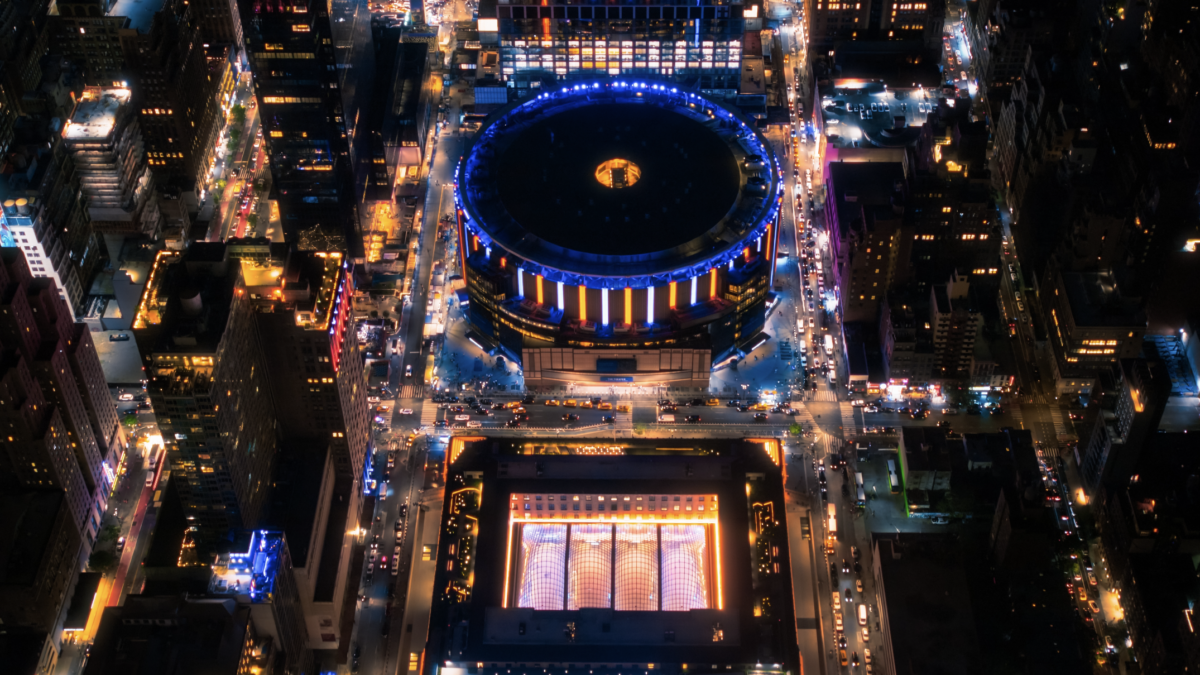
Former President Donald Trump has ignited a fiery debate on New York City infrastructure by backing the relocation of Madison Square Garden (MSG) to overhaul the crumbling Penn Station. In a pointed Truth Social post, he labeled the station a “total disaster” and called for its complete reconstruction by shifting the famed arena. This provocative stance highlights decades of commuter misery at one of the world’s busiest transit hubs, stirring up talks on urban renewal, real estate dynamics, and bold political moves.
New Yorkers have long grappled with Penn Station‘s chaos, hidden beneath MSG since 1968. Trump’s endorsement revives dreams of a modern gateway, but it pits vision against entrenched interests. As discussions gain momentum, the city faces a pivotal moment for transformation.


The Dark History Behind Penn Station and Madison Square Garden
The original Penn Station was a stunning Beaux-Arts icon, razed in 1963 to build Madison Square Garden. Its demolition sparked America’s preservation movement, yet today’s version traps over 600,000 daily passengers in a maze of neglect.
Madison Square Garden thrives above it all, hosting Knicks basketball, Rangers hockey, and blockbuster concerts. Owned by MSG Entertainment, its lease runs long-term, creating relocation roadblocks amid hefty investments.
Key Issues Plaguing Commuters Daily
Low ceilings, confusing signs, and relentless crowds define the experience. Amtrak, LIRR, and subway riders navigate outdated spaces from another era.
- Extreme overcrowding: Platforms burst at peak times, sparking safety alarms.
- Deteriorating facilities: Leaking roofs and broken escalators frustrate millions.
- Productivity losses: Delays drain billions from the regional economy each year.
Ambitions like the scrapped Empire Station Complex sought underground fixes, but politics derailed them. Trump’s input offers a disruptive alternative.
Trump’s Vision: A Grand Rebirth for Penn Station
President Trump was direct: rebuild Penn Station entirely and relocate Madison Square Garden. He reminisced about the station’s lost majesty, pushing for a prestige-boosting revival.
This fits his developer roots, suggesting spots like the Javits Center or Hudson Yards. Freeing the current site could birth a station rivaling Europe’s finest transit jewels.
Madison Square Garden has wandered before, from its original square. Now generating $800 million annually and attracting 20 million fans, a move could reshape Midtown real estate for transit supremacy.
Why MSG’s Prime Spot Holds Back Progress
The arena’s footprint blocks comprehensive upgrades. Relocation promises unlocked land for expansive platforms and amenities, easing the commuter crush.
Prime Candidates for MSG’s New Home
Relocation buzz centers on strategic sites blending accessibility and growth potential.
- Hudson Yards: Vast space ties into booming neighborhoods with seamless transit links.
- Javits Center: Merging events and sports could supercharge conventions.
- West Side Yards: Underused rail land allows fresh builds without uprooting residents.
New venues might feature advanced tech, superior views, and fan-friendly upgrades, keeping MSG’s allure intact while elevating operations.
Reactions from Key Players: Cheers and Clashes
MSG Entertainment’s James Dolan fired back, deeming the plan “tone-deaf” and touting $1 billion in upgrades. He warns of operational chaos from uprooting.
Officials waver: MTA’s Janno Lieber eyes station wins but flags funding woes, while Governor Kathy Hochul focuses elsewhere, like the Gateway Tunnel.
Public Pulse and Expert Takes
Urban experts from the Regional Plan Association cheer decking rail yards for renewal. Social media erupts with commuter rants and chaos clips.
- Supporters: Preservation fans crave glory’s return; businesses salivate over tourism spikes.
- Critics: Labor groups dread disruptions; Dolan flags economic fallout.
Surveys reveal 70% New Yorker backing for a rebuild, fueling pressure on decision-makers.
Crunch Time: Costs, Timelines, and Tough Hurdles
Estimates peg the project at $5-10 billion, akin to mega-stadiums like SoFi. Funding could mix bonds, private cash, and federal aid from infrastructure packages.
Expect 5-10 years minimum, tangled in eminent domain, eco-reviews, and court fights over leases.
Smart Fixes to Clear the Path
Incentives like tax perks could sway Dolan toward a cutting-edge replacement. Public-private partnerships, proven globally, tap future income streams.
- Disruption control: Staged builds keep traffic flowing.
- Innovative tools: AI for crowds, vertical designs for efficiency.
- Eco-focus: Sustainable builds match NYC’s green agenda.
Game-Changing Wins for New York City
A revamped Penn Station envisions airy atriums, fluid transfers, and vibrant retail—like King’s Cross in London. Midtown could explode with appeal.
Construction might create 50,000 jobs, injecting $20 billion into growth. A fresh Madison Square Garden spotlights mega-events, dominating sports tourism.
Ripple Effects on Transit and Visitors
Linking to high-speed options like Brightline cements NYC as a rail powerhouse. Tourists flock to architectural wonders, padding hotels and eateries.
Fans score plush suites and parking perks, outshining rivals like Barclays Center.
Final Thoughts: Igniting NYC’s Next Chapter
President Trump‘s rally for moving Madison Square Garden shines a relentless light on Penn Station‘s decay after decades ignored. Despite towering obstacles—sky-high bills, political tangles, powerhouse egos—the rewards gleam: a revitalized portal thrusting New York onto the world stage.
Collaboration among stakeholders is key as fervor builds. Be it Trump’s blueprint or evolved schemes, momentum surges. New Yorkers merit infrastructure matching their drive—stay tuned for moves redefining the skyline and soul of Gotham.